

17 Days
English
2 - 10 people
Private touring vehicle throughout both countries; private flight between Nairobi and Antananarivo
Breakfasts, Lunch, Dinner
Kenya, Madagascar, Multi-Country, Signature Experience, Wildlife & Big Five
Argyle Grand Hotel, Sungura Safari Camp, Argyle Grand Hotel, Hostel du Père Pedro, Longoza Ecolodge, Hotel Vatola, La Renala, Soa Lia Hotel, Hotel Vatola, Nosy Manga
The moments that make this journey unforgettable.



On arrival, you’re met and transferred to your hotel in Nairobi, where the next two nights are spent. Depending on your arrival time, let your host arrange a private excursion into the city, or simply unwind by the pool before the journey begins in earnest.
Stay at: Argyle Grand Hotel or Hilton Garden Inn
Most travelers think of Kenya purely in terms of safari — today makes the case for everything else this country offers. The day opens at a coffee farm in the Kiambu region, roughly half an hour from the city center, where the Rift Valley’s fertile soil supports some of the country’s finest coffee plantations. A guided walk through the fields covers cultivation, harvest, and roasting, ending in a tasting that shows exactly how much roast level shapes flavor.
From there, the day shifts entirely — into Nairobi’s most vibrant street food market, where design-forward stalls sit alongside local artists selling their own clothing, bags, and jewelry. It’s worth setting aside real time here, both for the food and for a genuinely distinctive souvenir.
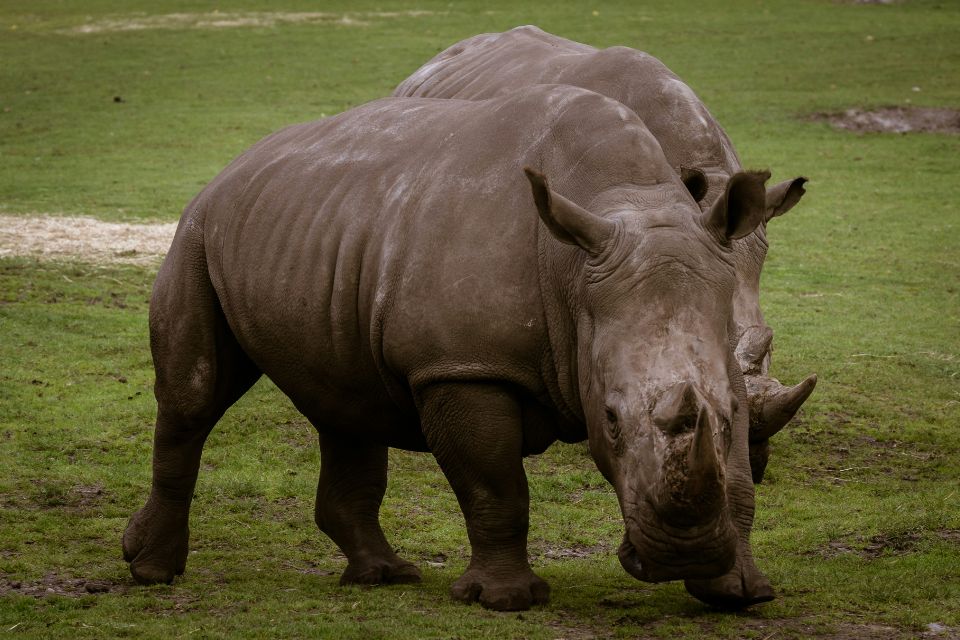
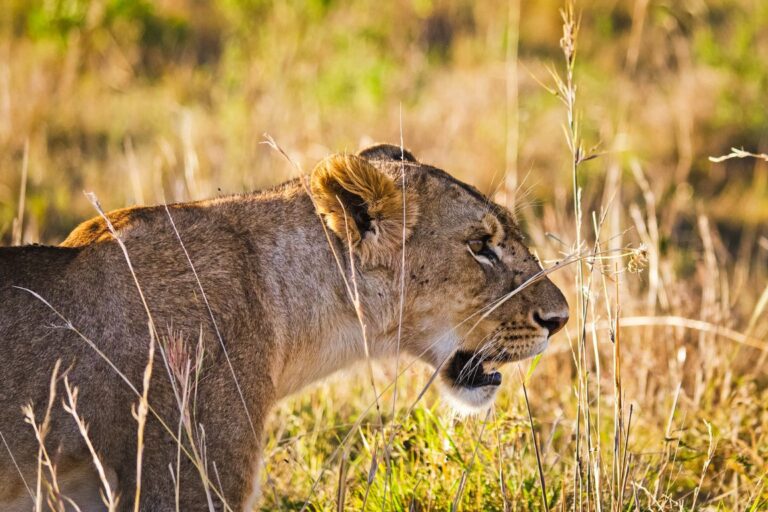
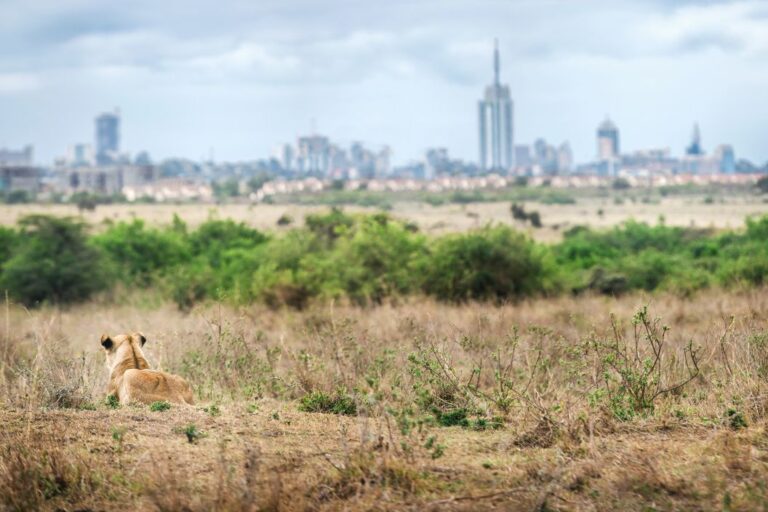
The day closes with your first game drive of the trip, inside Nairobi National Park — at just 117 square kilometres, one of Kenya’s smallest parks, and the only place on Earth where safari happens against a skyline of skyscrapers. Rhino sightings here are strong, both black and white, alongside lion and a wide range of other wildlife. (The one classic safari animal missing is the elephant — the park is simply too small to support them; Amboseli will more than make up for it.)
Stay at Argyle Grand Hotel
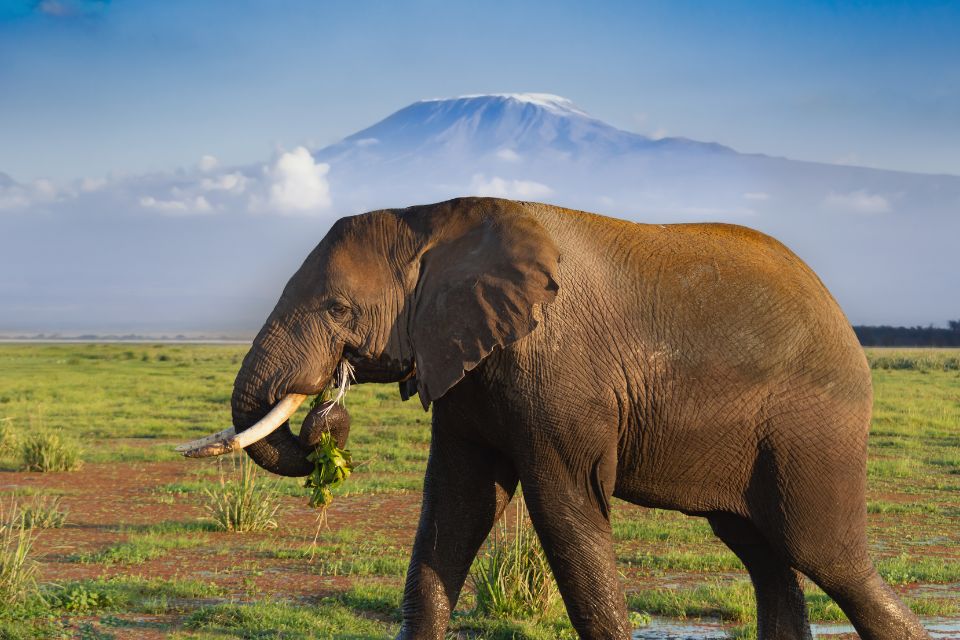
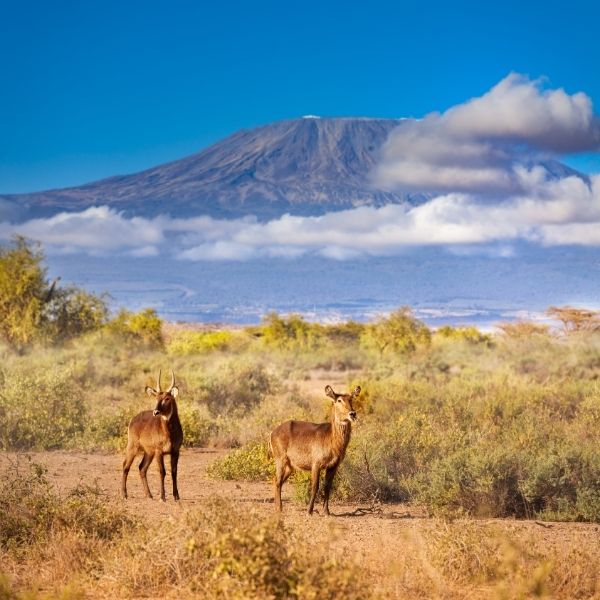
The city gives way to open country as you head toward Amboseli — one of Kenya’s smallest parks, and among its most rewarding, roughly four to six hours by road. On arrival, lunch waits at your lodge before your first Amboseli game drive. Kilimanjaro is often cloud-wrapped at midday but tends to clear by late afternoon, opening up the classic shot: elephant herds moving toward the mountain’s base forests as the light softens. Amboseli’s elephant herds are famously large, many carrying impressive tusks. Dinner and a night’s sleep follow.
Stay at Sungura Safari Camp
Amboseli’s draw goes well beyond its famous mountain backdrop. Even on cloud-covered days, the landscape itself carries real character — dusty plains giving way to marshy, bird-rich patches, with low vegetation that makes wildlife easy to spot. The scenery shifts with the seasons, its lakes drying and refilling with the rains. Beyond the elephants, over 80 mammal species call the park home, including wildebeest, giraffe, zebra, lion, leopard, and hyena.
Stay at Sungura Safari Camp
For those wanting it, a dawn hot air balloon safari can be arranged this morning — drifting above the clouds as first light catches Kilimanjaro, weather permitting. Otherwise, a leisurely morning at the lodge precedes the drive back to Nairobi. The afternoon is free — unwind at your hotel, or let your host arrange a further look at anything you missed on Day 2. One night is spent in Nairobi before Madagascar begins.
Stay at Argyle Grand Hotel
A private transfer to the airport for your flight to Madagascar — the “Great Red Island,” set apart in the Indian Ocean. On arrival, you’re met and assisted with currency exchange and, if needed, a local SIM card, before being transferred to your hotel for one night in the capital, Antananarivo, ahead of tomorrow’s deeper dive into the city.
Stay at Hostel du Père Pedro
A full day in Madagascar’s capital — known locally as “Tana,” a city whose difficult-to-pronounce name locals have long since shortened. Set in the island’s central highlands, Tana was founded in the early 1600s by the Merina king Andrianjaka, and by the late 1700s had become the seat of the first king to unite all of Madagascar.
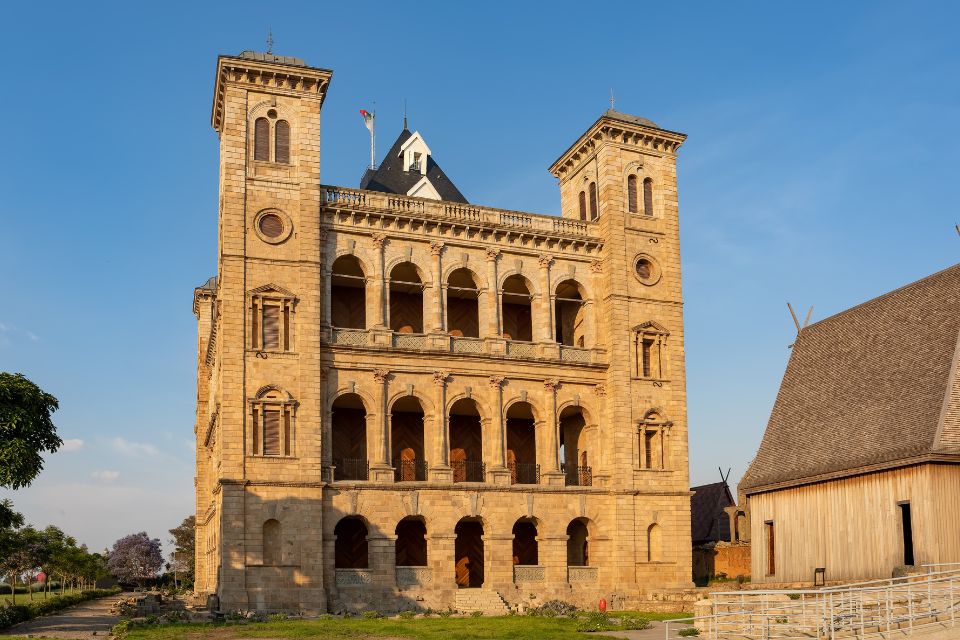
This afternoon’s visit is to the Queen’s Palace — not the King’s, because in Madagascar, the queens are the ones history remembers. Chief among them is Queen Ranavalona I, who ruled from 1828 to 1861 and earned the nickname “the Mad Queen” — her story alone makes the guided tour worthwhile, alongside that of the country’s last queen, Ranavalona III, exiled when the French colonized Madagascar at the century’s end.
Lunch is taken locally in town, with the afternoon left for browsing Tana’s excellent souvenir shops before the road trip begins tomorrow.
Stay at Hostel du Père Pedro
After breakfast, the journey turns east toward Andasibe-Mantadia National Park. Rolling hills dotted with rice paddies gradually give way to taller terrain and denser forest, the landscape thickening as you go. You’ll arrive in the late afternoon at your lodge for the next two nights.
The park itself is a merger of two protected areas — the Analamazoatra Special Reserve, established by the French in 1970, and Mantadia National Park, added in 1989 — together forming one of Madagascar’s most significant rainforest reserves. The rest of the day is yours to take in the setting around your lodge.
Stay at Longoza Ecolodge
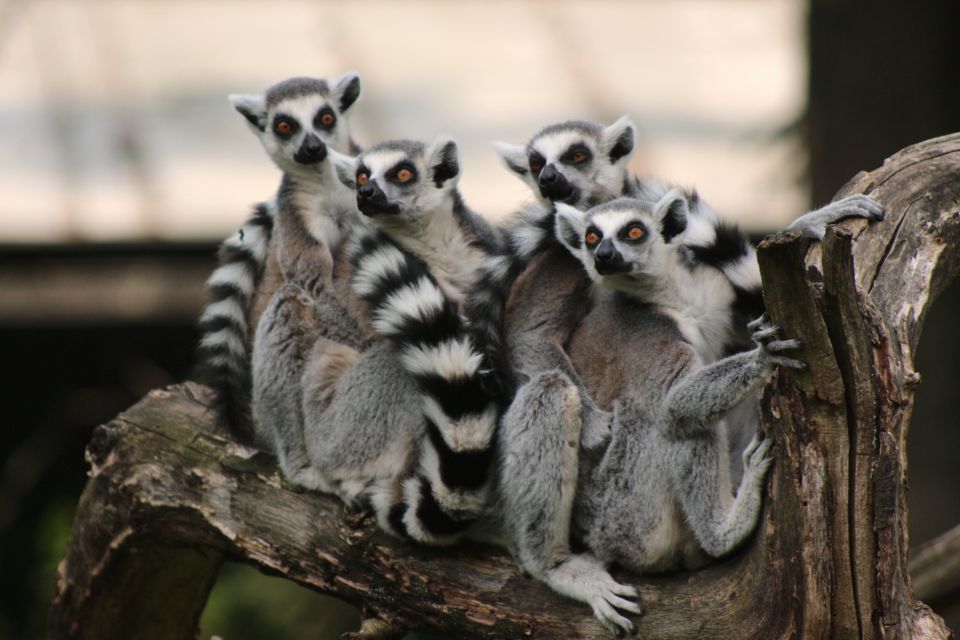
In Madagascar, proximity to an indri lemur — the largest of the island’s lemur species — is said to bring good fortune. This morning’s guided forest walk goes looking for exactly that. Indris cannot survive in captivity, so their future depends entirely on habitat protection — a cause your visit directly supports through park fees that fund conservation and reforestation.
You’ll likely hear them before you see them: their calls carry up to five kilometres, an unmistakable, piercing sound that tends to raise the hair on your arms the first time it echoes through the canopy. A spotter often works ahead of your guide to locate families more efficiently; binoculars are worth having, since indris spend their nights high in the treetops. As with all wildlife, nothing is guaranteed, but Andasibe remains one of the best places in Madagascar to see them. The forest also holds bamboo lemur, sifaka, brown lemur, chameleon, and extensive birdlife.
After a midday return to the lodge for lunch, the afternoon is free — a gentle forest stroll, if you’re inclined. As the sun sets, you’re back in the park with your guide for a night walk, searching for nocturnal wildlife. Mouse lemurs are the highlight here — creatures barely larger than a mouse, leaping between branches like miniature squirrels (one species, Goodman’s mouse lemur, wasn’t even discovered until 2005). Stick insects, frogs, and chameleons round out the night’s finds before dinner back at the lodge.
Stay at Longoza Ecolodge
After breakfast, the road turns back toward Tana for lunch, along what’s considered one of Madagascar’s best-maintained roads. Before heading south, it’s worth knowing the local concept of mora mora — “take it easy” — which captures how road travel here actually works: not necessarily slow, but entirely on its own schedule. An old French-era lorry breaking down, or an ox cart holding up traffic, is simply part of the rhythm — and the scenery, warmth, and passing glimpses of local life make the pace worth surrendering to.
Today’s destination is Antsirabe, roughly five hours south through Madagascar’s central highlands — a region defined by dramatic rice terracing, where every available slope has been turned into a paddy fed by hand-dug irrigation channels. Zebu cattle, the island’s hump-backed answer to Indian cattle (though not sacred here, and very much on the menu), are a constant roadside presence.
Antsirabe itself was founded by Norwegian missionaries in the late 1800s, who taught local brickmaking — a skill the French later used to build the town’s most elegant landmarks, including its railway station. Dinner and an overnight stay follow.
Stay at Hotel Vatola
An early start for the longest drive of the journey, west to Morondava on Madagascar’s coast — a return trip later in the itinerary will be broken into two more relaxed stages, so today’s pace is deliberately direct. The route runs through small villages and rolling countryside, lush and green after rain, sun-bleached gold in the dry season, calling to mind the Irish countryside at points.
Around the halfway mark, the small town of Miandrivazo — whose name translates to “waiting for the princess,” with a local legend worth asking your guide about — offers a lunch stop before the road continues. Shortly after, you’ll cross the Tsiribihina River, one of western Madagascar’s most vital waterways. As rice fields reappear and the first baobab trees come into view, Morondava is close — the base for the next three nights.
Stay at La Renala
A day intentionally left open after yesterday’s long drive — a late start, a slow breakfast, a walk along Morondava’s wide, powder-pale beach. (Worth noting: this isn’t a classic swimming beach, as river silt from nearby estuaries clouds the water — though the seafood, brought in fresh daily by local fishermen, more than makes up for it.)
The real draw sits about 20 kilometres outside town: the Avenue of the Baobabs, a dirt road lined with more than 20 ancient trees, some nearly 800 years old. Bare-branched for much of the year — baobabs shed their leaves in the dry season to conserve water — they stand like natural sculpture along the road. By day, it’s simply a route between villages; toward sunset, it becomes something else entirely, the trees silhouetted against a sky shifting through pink, violet, and orange. It’s a moment that earns its reputation. Dinner follows back in Morondava.
Stay at La Renala
An early departure north along the Avenue of the Baobabs — quieter and starkly different in full daylight, and worth the camera time before the day’s main destination: Kirindy Reserve, one of Madagascar’s best-preserved dry deciduous forests, and a cornerstone of the island’s biodiversity. Some 95% of the plant life here is found nowhere else on Earth, and the wildlife follows suit.
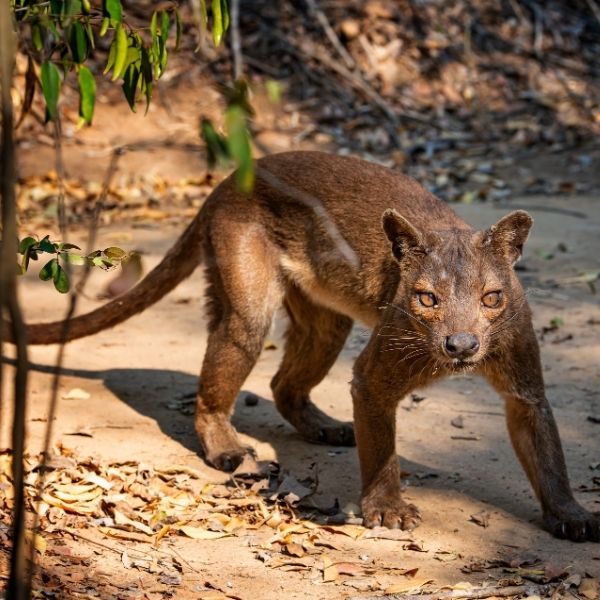
The headline species is the fossa, Madagascar’s largest predator — part cat, part mongoose in appearance, and genuinely elusive. Kirindy is among the best places on the island to find one, with October–November mating season offering the strongest odds, though sightings happen year-round. Eight lemur species live in this forest, including the world’s smallest primate, Madame Berthe’s mouse lemur, at just over 9 centimetres — vanishingly hard to spot, unlike the far more visible, territorial sifaka lemur, which a knowledgeable local guide tends to locate reliably. Chameleons, amphibians, and the occasional snake round out the day, often without another traveler in sight. The drive back to Morondava may deliver a second baobab sunset, if timing allows.
Stay at La Renala
The return journey east begins, deliberately split into two stages this time rather than retraced in one long push. Today’s stop is Miandrivazo, the lunch town from Day 11 — this time, an overnight stay. After lunch, a boat trip on the now-familiar Tsiribihina River offers a slower, more intimate look at riverside village life.
Stay at Soa Lia Hotel
A five-to-six-hour drive continues east toward Antsirabe, with a lunch stop along the way. Just outside town, a visit to Lake Tritriva — a striking blue-green crater lake wrapped in local legend, including a forbidden-love story said to explain why swimming here isn’t permitted. It’s also one of Madagascar’s deepest lakes. Dinner and an overnight stay follow in Antsirabe.
Stay at Hotel Vatola
A relaxed morning in Antsirabe — a rickshaw tour of town can be arranged, if you’d like — before an unhurried drive back to Tana for your final night in Madagascar.
Stay at Nosy Manga
Depending on your flight schedule, the morning — and possibly the afternoon — is free. Tana’s souvenir shops are worth a final visit for any last gifts, or let your host arrange a half-day excursion if you’d rather not simply relax by the pool. A private transfer to the airport closes the journey — though Madagascar has a way of leaving people already planning a return trip.
Prefer not to head home just yet? This journey extends seamlessly into a coastal retreat on Nosy Be, in northern Madagascar.
✗ International flights to and from Nairobi and from Antananarivo home (quoted separately based on your preferred routing)
✗ Visa fees and travel insurance
✗ Optional excursions beyond the itinerary — including the Amboseli hot air balloon safari, additional Nairobi excursions, and the Nosy Be extension
✗ Alcoholic beverages and premium drinks beyond what’s specified at each property
✗ Gratuities for guides, camp staff, and drivers
✗ Personal expenses — spa treatments, laundry, souvenirs, and similar
✗ Vaccinations and any required travel health documentation
✗ Any additional nights or extensions beyond the confirmed itinerary
Kenya offers an efficient, classic safari opening — including a rare urban safari inside Nairobi National Park and Amboseli's Kilimanjaro views — before the journey shifts into Madagascar's very different, rainforest-and-dry-forest wildlife experience.
Yes — you're driven throughout in a private vehicle with a dedicated guide, though road quality varies and travel days can run long, particularly between Antsirabe and Morondava. The pace reflects Madagascar's own rhythm, and the scenery along the way is part of the experience.
Strong, though never guaranteed with wild animals. Andasibe is considered one of the best places in Madagascar to hear and see indri lemurs, and Kirindy is among the top spots for fossa sightings, especially October–November.
Yes — the journey extends seamlessly into a coastal retreat on Nosy Be in northern Madagascar for those who'd like to close the trip with time at the coast.
From$5,499.00
From$5,499.00

There are no reviews yet.