

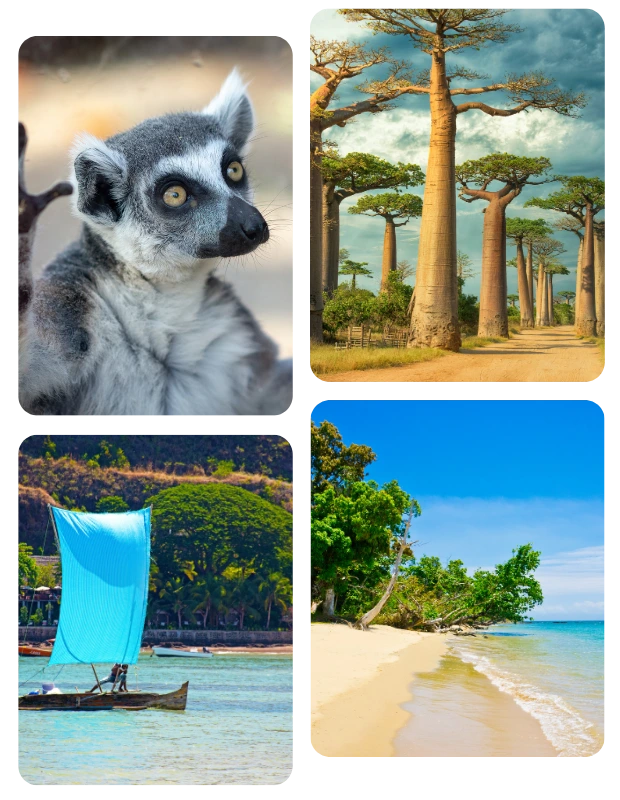
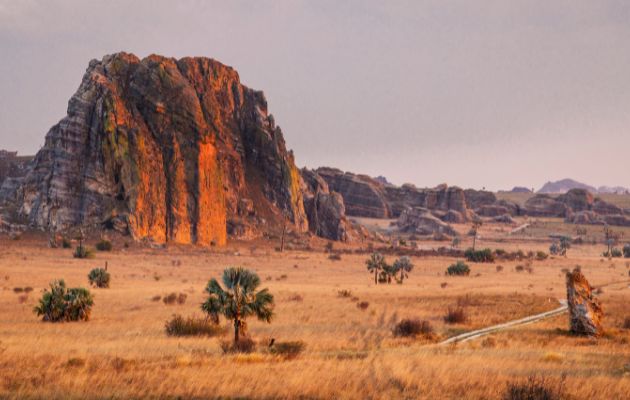
Madagascar split from mainland Africa millions of years ago, and what evolved in isolation exists nowhere else — from the surreal silhouettes of the Avenue of the Baobabs to the otherworldly spiny forests of the south.

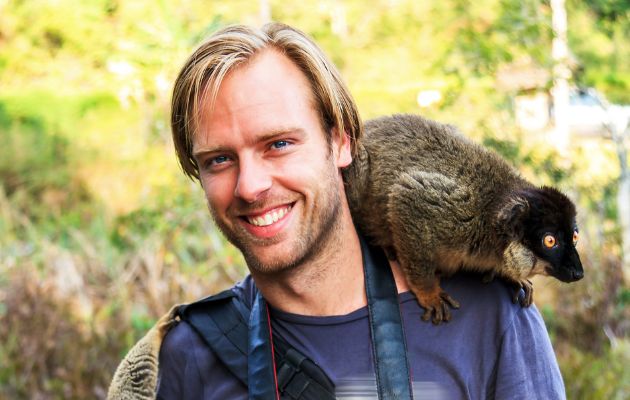
Lemurs are Madagascar's signature encounter — over a hundred species found only here, from the tiny mouse lemur to the haunting call of the indri echoing through rainforest canopy at dawn.

Madagascar's coastline extends the bush-to-beach philosophy further still — dhow sailing along its western shores offers a slower, wind-powered counterpoint to the private air transfers that connect the rest of your journey.
Weather in Madagascar
The dry season (Apr–Nov) offers the best wildlife viewing and easiest travel; the wet season (Dec–Mar) brings lush scenery but higher cyclone risk on the east coast.

What to Pack
Lightweight layers, sturdy walking shoes for forest reserves, and rain gear if traveling in the wet season.
Visas & Entry
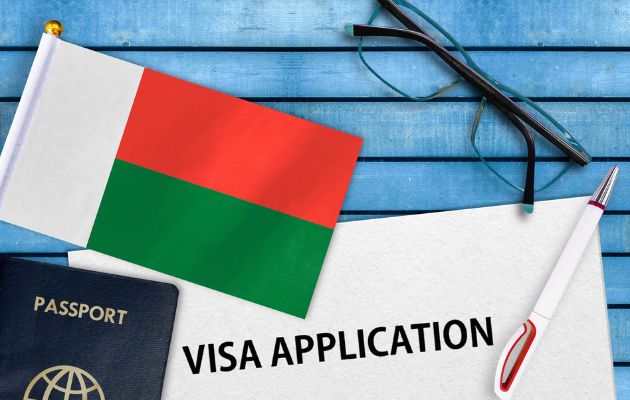
Most nationalities can obtain a visa on arrival or e-visa in advance; your safari consultant will confirm requirements for your passport.
Getting Here
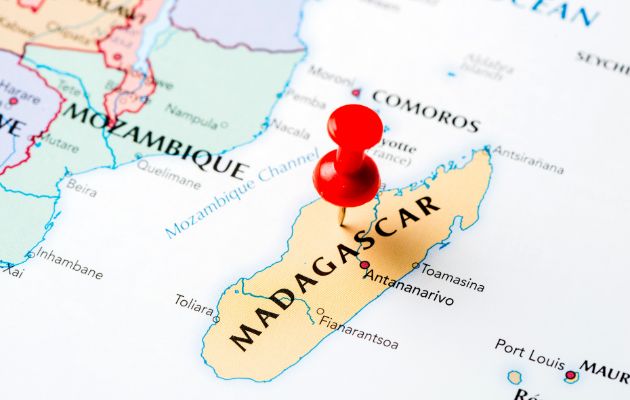
Madagascar is typically reached by private air, either directly from a mainland safari destination or via a connecting international flight, depending on your itinerary.
Health & Safety
Malaria prophylaxis is advised for most regions; yellow fever vaccination is recommended if arriving from certain countries.
